

Why Are Women 73% More Likely to Be Injured in Car Crashes? What Charlotte Drivers Need to Know
Here's something that might surprise you: women are 73% more likely to get seriously hurt in car crashes than men and 17% more likely to die. And no, it's not about driving skills.
The real culprit?
Car safety systems have been designed and tested using crash test dummies modeled after the average guy from the 1970s. Yep, you read that right. The good news is that in November 2024, the U.S. Department of Transportation finally approved the THOR-05F, the first crash test dummy that actually represents female anatomy.
The not-so-good news? It won't be required in safety testing until 2027 or 2028, so that safety gap is still hanging around for Charlotte drivers right now.
The Crash Test Dummy Problem Nobody Talked About
So here's the deal. For over 40 years, the car industry has been using the Hybrid III crash test dummy, basically a 5'9", 171-pound dude from the disco era. When they finally added a "female" dummy in the early 2000s, they just made it smaller and slapped on some breasts. Seriously. They didn't account for how women's bodies are actually different.
And those differences? They really matter:
Your hips aren't the same - Women have rounded pelvic bones, which means seatbelts sit on our bodies completely differently. That creates injury patterns the old dummies never picked up on.
Neck structure is different - Female necks respond to impacts differently, which is why women are three times more likely to get whiplash in rear-end collisions. Fun fact nobody wanted.
Legs and feet take more damage - Women experience way higher rates of lower leg, ankle, and foot injuries because—shocker—our anatomy below the waist is different from men's.
Chest and torso differences matter - How airbags and seatbelts interact with your body depends on muscle mass and rib cage structure, which varies between men and women.
Get this: University of Virginia researchers found that women wearing seatbelts still have 73% greater odds of getting seriously hurt in frontal crashes compared to men in the exact same type of accident. This isn't about who's a better driver, it's about cars being designed for male bodies.
Say Hello to THOR …
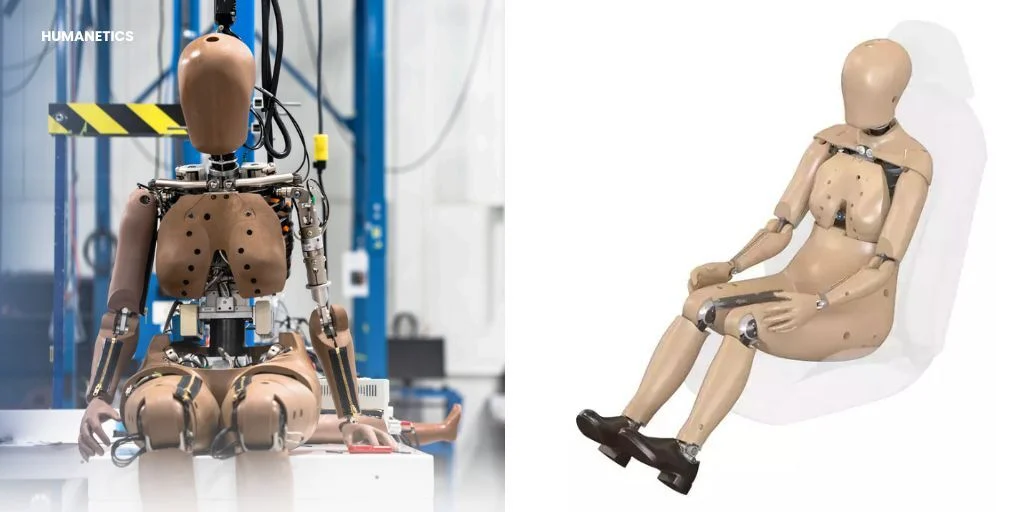
The new female crash test dummy THOR-05F, (lovingly named THOR!) is actually pretty impressive:
Built like an actual woman - Finally includes real female body structure like pelvic shape, neck mechanics, and bone proportions instead of just being a shrunken dude.
Packed with 150+ sensors - Collects three times more injury data than the old dummies, tracking everything from brain impact to broken bones.
Tests what really happens - Shows how seatbelts, airbags, and car structures actually work when a woman's in the driver's seat.
Already in use overseas - European testing programs are already using it, so they're ahead of us on this one.
Now, there's a catch… this dummy represents a pretty small woman (4'11", 108 pounds), so it doesn't really match the average woman's size. But let’s stay positive, it's still a huge step up from what we've had.
What Does This Mean for Your Car Here in Charlotte?
At Starnes Collision Center, we see all kinds of vehicles come through our shop, and this stuff matters for real people every day.
If you're driving a 2024 or older vehicle: Your airbags, seatbelts, and seat structures were mostly designed and tested with those old male dummies. That doesn't mean your car is a death trap, but it does mean the safety features might not work as well for women as they could.
What's coming in newer cars (2027 and beyond): Once car companies start using the new female dummy data, you should see:
Airbags that deploy at the right time and force for women's body positions
Seatbelts that actually fit different torso shapes properly
Seats built for varied body types and heights
Better dashboard and steering wheel positioning for shorter drivers
When you've been in an accident: This is important… when we repair your car at our Old Pineville Road shop, we put everything back exactly how the manufacturer designed it. We're talking sensors, airbag modules, structural components, all the stuff that's supposed to keep you safe next time. And yeah, that matters even more when the original design wasn't perfect to begin with!
There's a Bill Trying to Speed This Up
A bunch of senators from both parties (including Deb Fischer from Nebraska and Tammy Duckworth from Illinois) introduced something called the "She DRIVES Act" to make this happen faster.
Here's what they want:
Force safety testers to use the newest, most advanced crash dummies—including putting female dummies in the driver's seat where they belong
Update the whole testing process to match who's actually driving cars these days
Move faster than the 2027-2028 timeline we're looking at now
Potentially save about 1,300 lives every year, according to safety experts
Each dummy costs about a whopping million bucks, and rolling this out across the industry might hit $50-60 million. But when you're talking about preventing deaths and serious injuries it’s kind of a no-brainer.
What You Can Do Right Now & how we can help you
Look, we can't wait around until 2027 for car companies to get their act together. Here's what you should know today:
Fix your seatbelt position - Make sure the lap belt goes across your hips (not your stomach) and the shoulder belt crosses your chest without cutting into your neck. Move your seat if you need to.
Adjust your headrest - The middle of the headrest should line up with the middle of your head. Sounds basic, but it seriously helps with whiplash.
Don't skip the inspection after a crash - Even fender benders can mess with your safety systems. Get it checked out at a real collision center like Starnes Collision Center. Those systems need to work perfectly next time.
Keep an eye on new car safety ratings - Once cars start being tested with the THOR-05F after 2027, look for improved ratings that actually account for different body types.
Bottom Line for Charlotte Families
It's pretty wild that it took this long to get a female crash test dummy approved, but at least it's happening. The problem is, until it's actually required and car companies redesign their safety systems, that 73% injury gap is still there.
No matter what you drive; sedan, SUV, truck, whatever, safety should matter. And when something goes wrong, our team at Starnes Collision Center makes sure your vehicle's safety systems get put back together right. We know how this stuff works, and we're super serious about keeping Charlotte drivers safe.
Got questions about your car's safety features, need us to check your seatbelt position or need repairs after an accident? Come see us at 5700 Old Pineville Road in Charlotte, or give us a call for a free estimate. We'll take care of you.
Why Charlotte Drivers Trust Starnes Collision Center

62 years of trusted local repairs, a legacy since 1964.
I‑CAR Gold Class–certified technicians, using advanced equipment like Car‑O‑Liner.
Transparent, OEM-focused repairs with clear photo documentation at every stage.
A lifetime warranty and strong track record with major insurers .
Online scheduling and strong local reputation—4.8★ from 92 reviews
Get in Touch
Let us know your questions or queries regarding your vehicle’s repair and we will be happy to help!
